
Thursday, December 8, 2016

Wednesday, November 30, 2016
Learning about sustainability
Today in class I further expanded my knowledge on supply chain managements such as in the cocoa company. In Africa the poverty stricken communities are using child labor to try and sustain themselves in an unsustainable business. Companies that buy the cocoa want child labor to stop so they promise to pay the farmers more if they no longer let children work on their plantations. After learning about the cocoa industry I looked into Apple's idea of sustainability. Apple is looking to create new solar energy products to reduce their carbon footprint. The Apple corporation wants to use "greener" materials to create safer products and manufacturing processes. Today I really was able to get a bigger picture on how the world works behind the scenes with supply chains.
Apple Environment Plan
Apple Environment Plan
Tuesday, November 22, 2016
supply chain management definition
Supply chain management is the oversight of materials, information, and finances as they move in a process from supplier to manufacturer to wholesaler to retailer to consumer. Supply chain management involves materials flowing both within and among companies.
SCM Website
SCM Website
Friday, November 18, 2016
Smoke Signals Essay - Harrison Pearson
The film, Smoke Signals, by Chris Ayre carries a universal message to people about the nature of forgiveness, as well as Victor's effort to come to terms with his personal history and understand who he is. The movie Smoke Signals is about a young Native American boy named Victor growing up on an indian reservation. Life is hard on an indian reservation with little job opportunities and little work. In the movie the filmmaker portrays how a Native American Indian growing up in a rapidly modernizing world will experience hardships, stereotypes, as well as coming to terms with his past.
Growing up on an Indian Reservation in the 19th century were very difficult. Very little happens on the reservation and they usually are in poverty because the lack of work. Early on in Smoke Signals Victor has his father, Arnold, around to provide for his family. Though Arnold is a drunkard who beat his wife and son they both still loved him. It was then one day that he got up and left because his wife and son wanted his problem to end and stop drinking. Once an indian leaves he never comes back is what was always said after Arnold was gone. Victor then had to grow up on the reservation without his father and constantly torn apart by his father leaving. Victor being Native American gave him very little access to good education and also made it very difficult to find work and provide for his Mom. Most would see that he was an Indian and not be fair. Victor later on discovered that his father had died and that he was going to retrieve his ashes and his old Ford truck in Arizona.
Being a Native American in the 19th century puts Victor at a huge disadvantage compared to that of a white man. Being an Indian makes him susceptible to being prejudiced by racist whites as well as being treated unequally when it comes to education and work. Today when people think of Indians they think about luxurious head dresses, horses, bows, ect. In the movie there were some specific moments that were disrespectful to Victor's ethnicity such as when on the bus the white folks took their seat and when they asked for it back their heritage was just made fun of based on the indian stereotypes. Further on in the movie as Victor and Arthur are heading home they come across a wreck involving a drunk white man. Victor in the end saves all of those who were involved in the wreck by running on foot to the nearest town for help. In the end the white man who was driving drunk and caused the wreck tries to pin the disaster on Victor saying that he was the drunk one and trying to assault him. Seeing this in the movie made me think they were about to just be treated unfairly but the statement from the white mans wife saying he was an "ass" which ended up setting the story straight and letting Victor be free to go home.
Victor every since his childhood had been angry with his father. In the movie when he goes to retrieve his fathers ashes and truck discovers a lot about himself that he did not know. When he gets to his fathers final resting place he meets Susan who told him through the art of storytelling of his father as well as discovered the origin of the fire when he was a baby. Victor realizes why his father ultimately left and hadn't returned. Arnold had never been able to forgive himself for what had happened that night. Victor finds himself closer to his culture and is able to forgive his father. In the end of the movie he is able to release his father's ashes in an indian burial ritual over the waterfall and let go of his father and as well as his burdens.
Thursday, November 10, 2016
Swastika in US History
The swastika has been around in the United States since the ancient civilizations. Native Americans look at the swastika and see well being for all, a symbol of reincarnation, as well as the eternal nature of Brahman. The Navajo used this symbol to represent whirling logs. When the Nazi's adopted this symbol it brought a sense of destruction rather than the well being for all. Indians used this symbol at ceremonies and for celebration. The symbol today is very controversial with the way that it has been used in history.
http://www.stephen-knapp.com/swastika_its_real_meaning.htm
http://www.stephen-knapp.com/swastika_its_real_meaning.htm
Monday, October 31, 2016
Life Out West in Newspapers
Los Angeles Daily Herald, February 21, 1874
Published Every day except Monday
The Los Angeles Daily Herald was a very factual well rounded kind of newspaper in the late 1800s. It covered all things politics and important matters with the railroad construction. The newspaper talked about Freeman's Bill and how it concerned the freight of railroad materials into California.

Los Angeles newspaper spoke of the railroads reaching all the way to Vaca Station (Picture below).

The Los Angeles news paper also had tons of ads advertising things like beer from the new brewery to the stockpile of socks and shoes that just came in. The daily newspaper showed the schedules of the trains and kept the people living in Los Angeles up to speed with what went on in their city during 1874.

Tuesday, October 25, 2016
Film Research
Harrison Pearson
10/25/16
USH - Learning History Through Film Essay
In my first quarter of eleventh grade history I learned that movies can be greatly resourceful when being used to explore real world events. In US history we were studying the topic on slavery. In class we watched both the movie Glory and the movie Twelve Years a Slave. Through watching the movies I was able to gather historically accurate information and see how things were in the past as depicted by the movie. By watching movies it is possible to explore real historical events, circumstances, as well as attitudes.
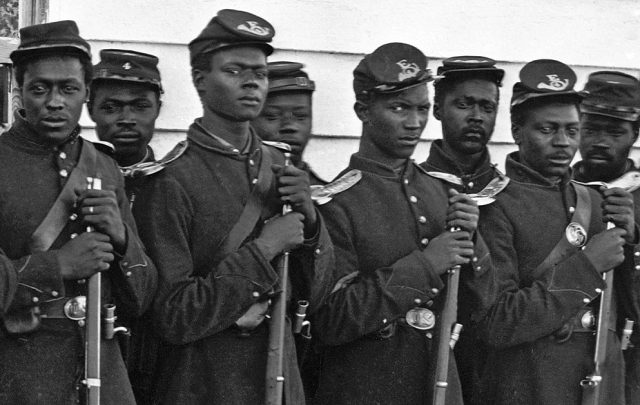
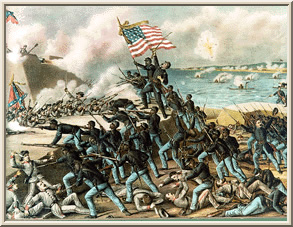
In historical movies it is hard for the film writers to condense every small detail of history and put it into a small two hour movie and sometimes that can just be boring. In the movie Glory it was able to accurately show as the 54th regiment trained and ultimately were lead into battle by General Shaw. But like many historical movies it is hard to keep each fact completely accurate and keep the audience engaged. The movie failed to show that General Shaw was married during the time that the movie covered but that was one of the small details that the film writer was able to leave out. In order for the movie to be successful it has to be able to have a balance between the historical side and keeping the audience engaged. Glory was able to do a good job with this when it showed the Battle of Fort Wagner on July, 1863 as the regiment charged into battle fighting for their country. Glory was also able to show the Pay Crisis in 1862 depicting the history of how the black soldiers were treated even though they were free at the time. The black soldiers of the 54th regiment revolted due to the fact that white soldiers were payed three dollars more even though they all are putting their lives on the line. The next good example of a historical movie which you can draw accurate information from is Twelve Years a Slave telling the story of Solomon Northup, a free black man from Washington whom was kidnapped and sold into slavery. This movie was able to show first hand how slaves were treated. The movie shows that the slaves would be whipped if they failed to reach a certain quota of cotton picked a day, which was shown throughout plantations as punishment. The movie historically shows that Solomon’s slave owner, McQueen was actually having an affair with one of the slaves. In the end the movie shows Solomon being saved and taken back to his family up North after twelves years of harsh treatment in slavery. Movies are able to cover a large amount of historically accurate information in a short time while also keeping the audience engaged the whole time, this makes movies a good source to learn from during class. It is also easy to explore different aspects of events through watching movies.
When studying history it is important to understand how the people were acting during the time, or in other words important to understand their speech, tone, and attitudes towards others. The movie Glory was able to show how the soldiers acting during their training and how their relationships with each other changed over the course of the movie. Over the course of the movie through harsh times the soldiers slowly came to know each other as brothers all fighting for the same cause. It showed the somewhat harsher treatment during their training than a regular white solider would have been given as depicted by the officer during their training making sure there was not one mistake made. During the training of the 54th regiment General Shaw distanced himself from his soldiers though he had a close friend serving under him. As the movie progressed he too was able to grow closer together with his soldiers regardless of their skin color. In the movie Twelve Years a Slave the tone and attitude was very important to be able to see as slaves received extremely harsh treatment under some circumstances. Such as when McQueen’s best cotton picker female slave whom he had the affair with went to get soap to wash with he had her punished. He relentlessly made Solomon whip her until he couldn’t make himself do it again which is when he still took the whip and continued to lash out, making an example and showing his dominance over the other slaves. When reading about an event like that its hard to imagine exactly how things happened. In both movies it showed the other aspect of what we were learning about. It provides more background to the topic giving a stronger foundation of the information being learned, which is another reason movies are a good way to explore different historical events.
Movies are great way to explore different historical events, circumstances, and attitudes. They provide a strong background as well as a more detailed way of learning. It is easier to watch and see how things were during the time rather than to only read about an event. This is why I believe it is possible to learn about important events from movies.
American Civil War - Colored Troops- Used to find a more serious look on the colored soldiers that were in the civil war and new black regiments

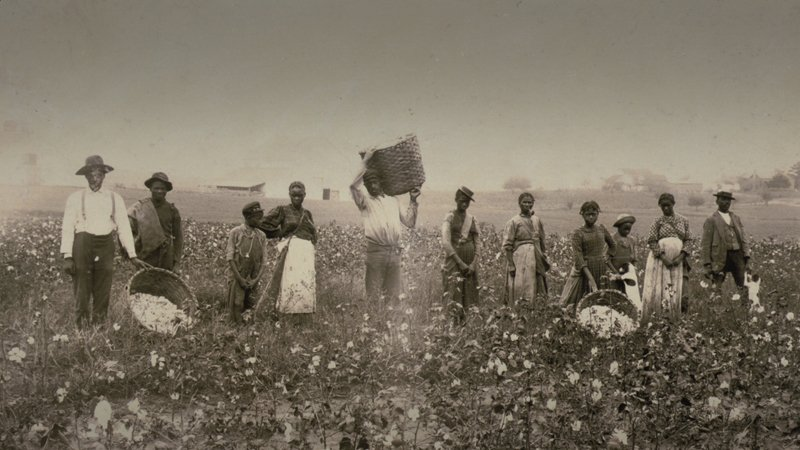
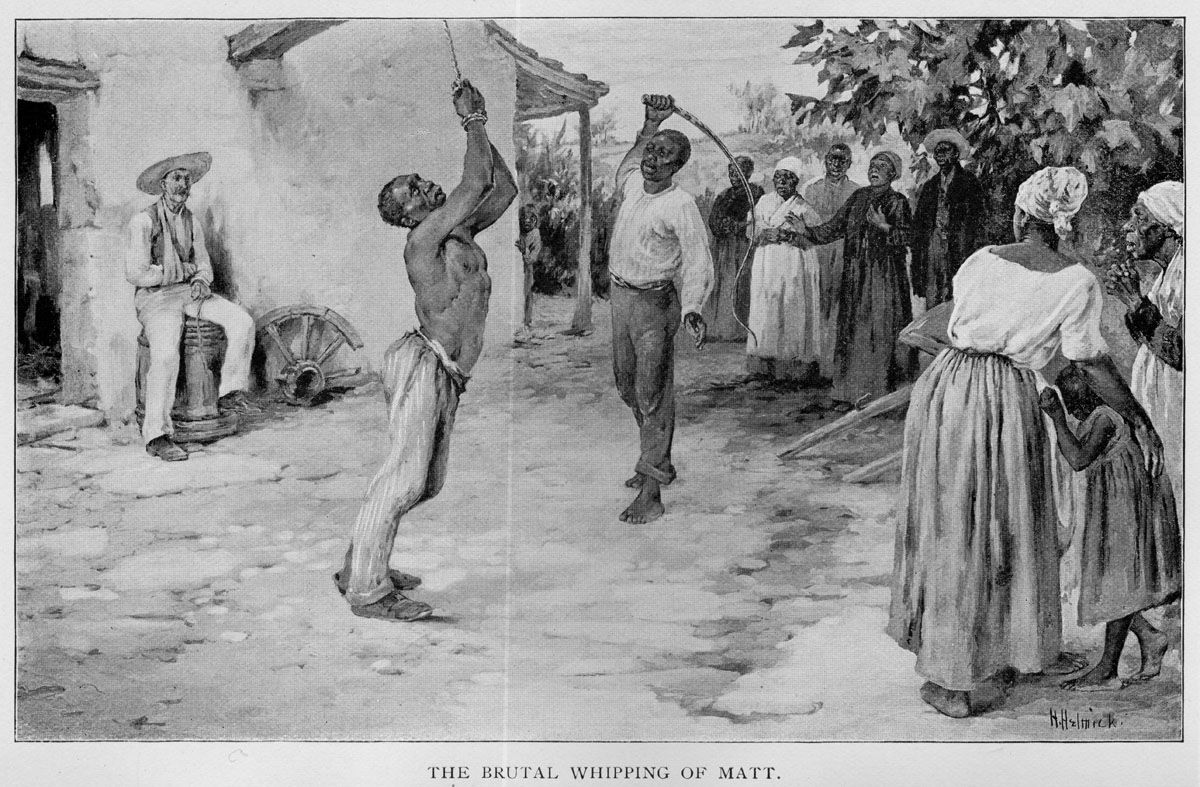 Slaves beaten harshly and sometimes required to beat other slaves for their master
CWmemory - 54th Massachusetts Regiment - Used to find more information the movie and see how someone other than myself viewed the movie
Civil War - Fort Wagner- Used to find more information on the Battle of Fort Wagner that occurred at the end of Glory
Americanyawp - Solomon Describes a Slave Market- Used to further dive into and explore the story of Solomon Northup to have accurate information to write about
Brevard, Keziah Goodwyn Hopkins, and John Hammond. Moore. A Plantation Mistress on the Eve of the Civil War: The Diary of Keziah Goodwyn Hopkins Brevard, 1860-1861. Columbia: U of South Carolina, 1996. Print.- Used the view of a slave owner to find a different view on Solomon's story
Subscribe to:
Posts (Atom)